Exercise Overview
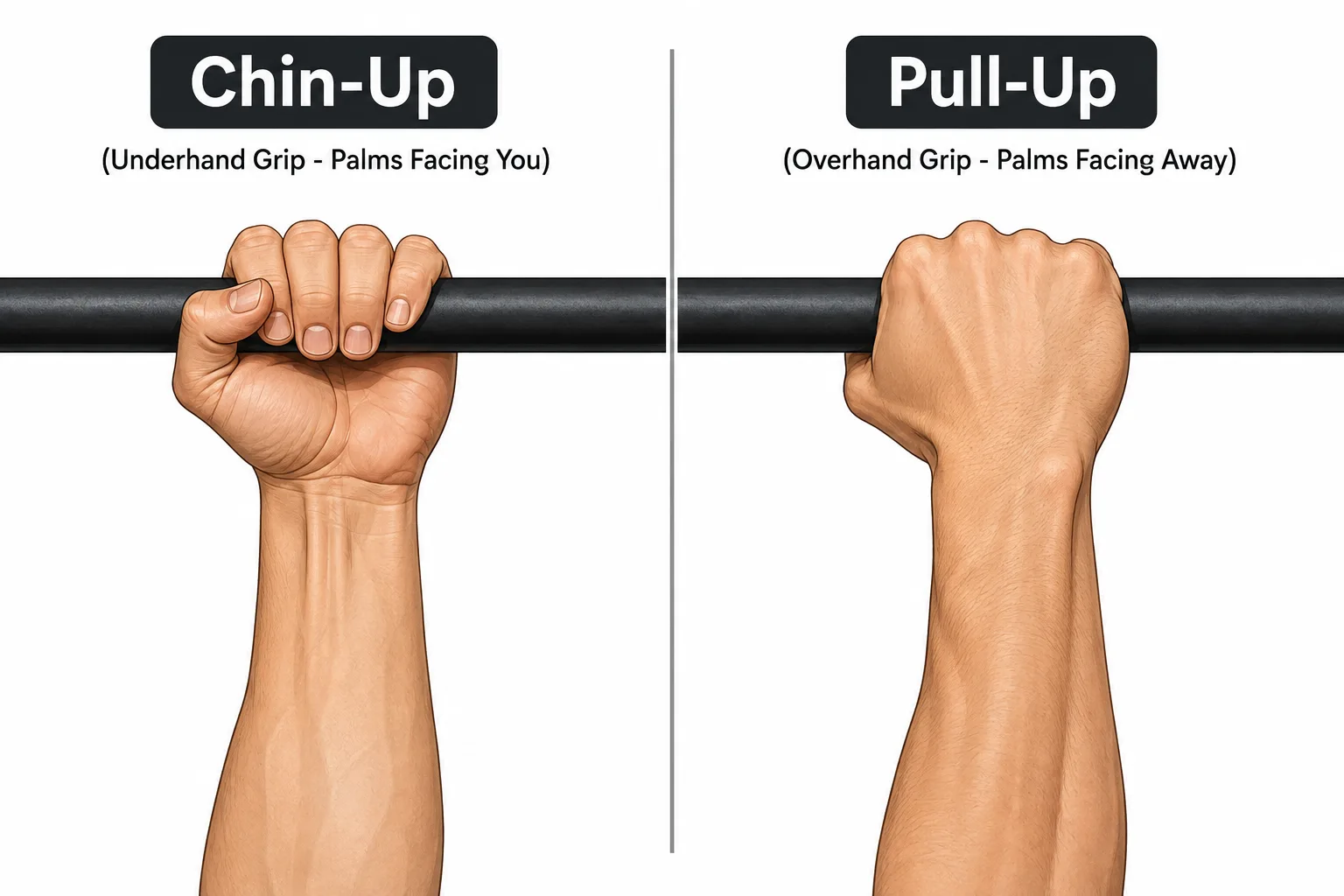
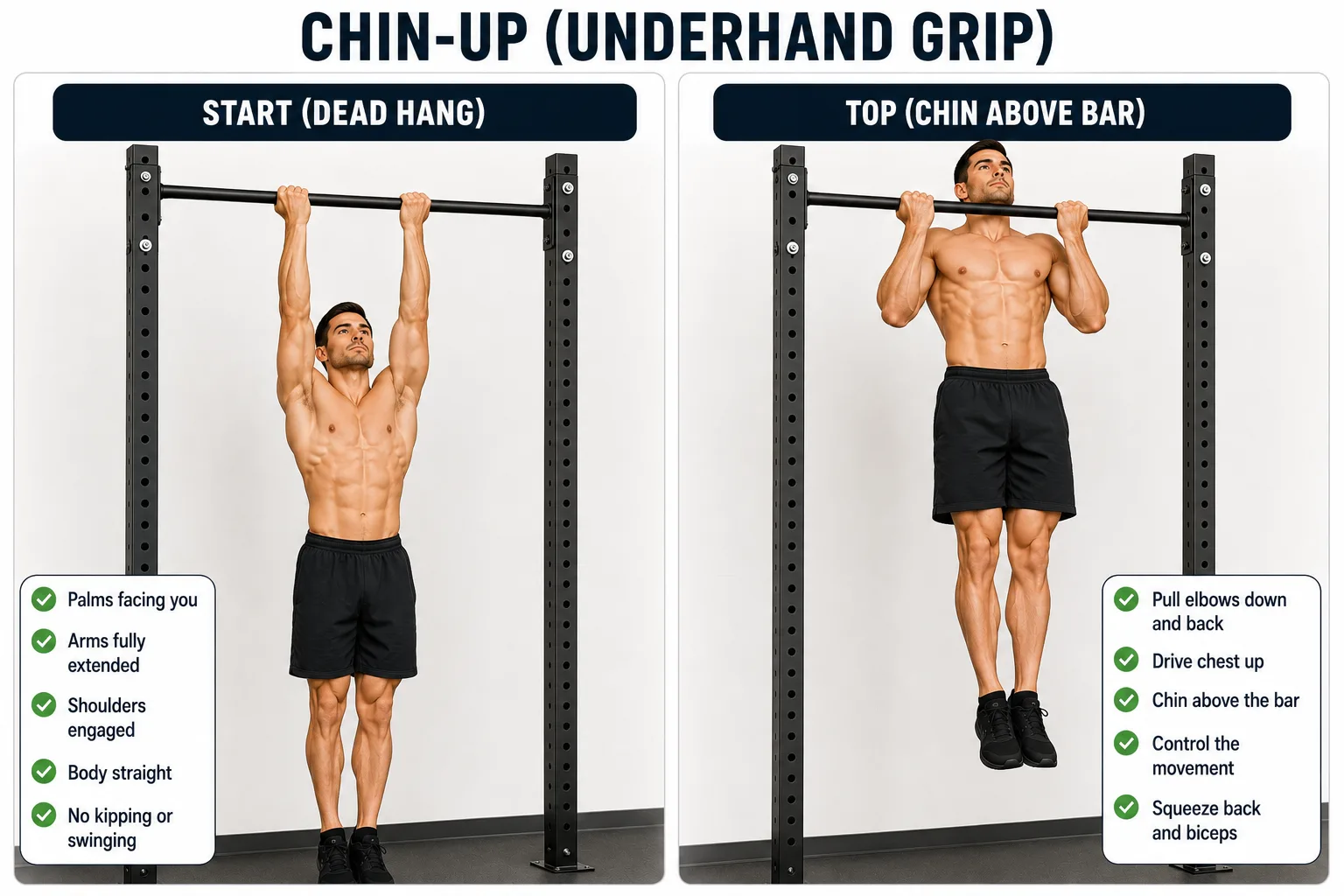
The chin-up is a bodyweight vertical pulling exercise performed with an underhand (supinated) grip, pulling the body up until the chin clears the bar. The underhand grip places the biceps in a stronger position to assist the lats.
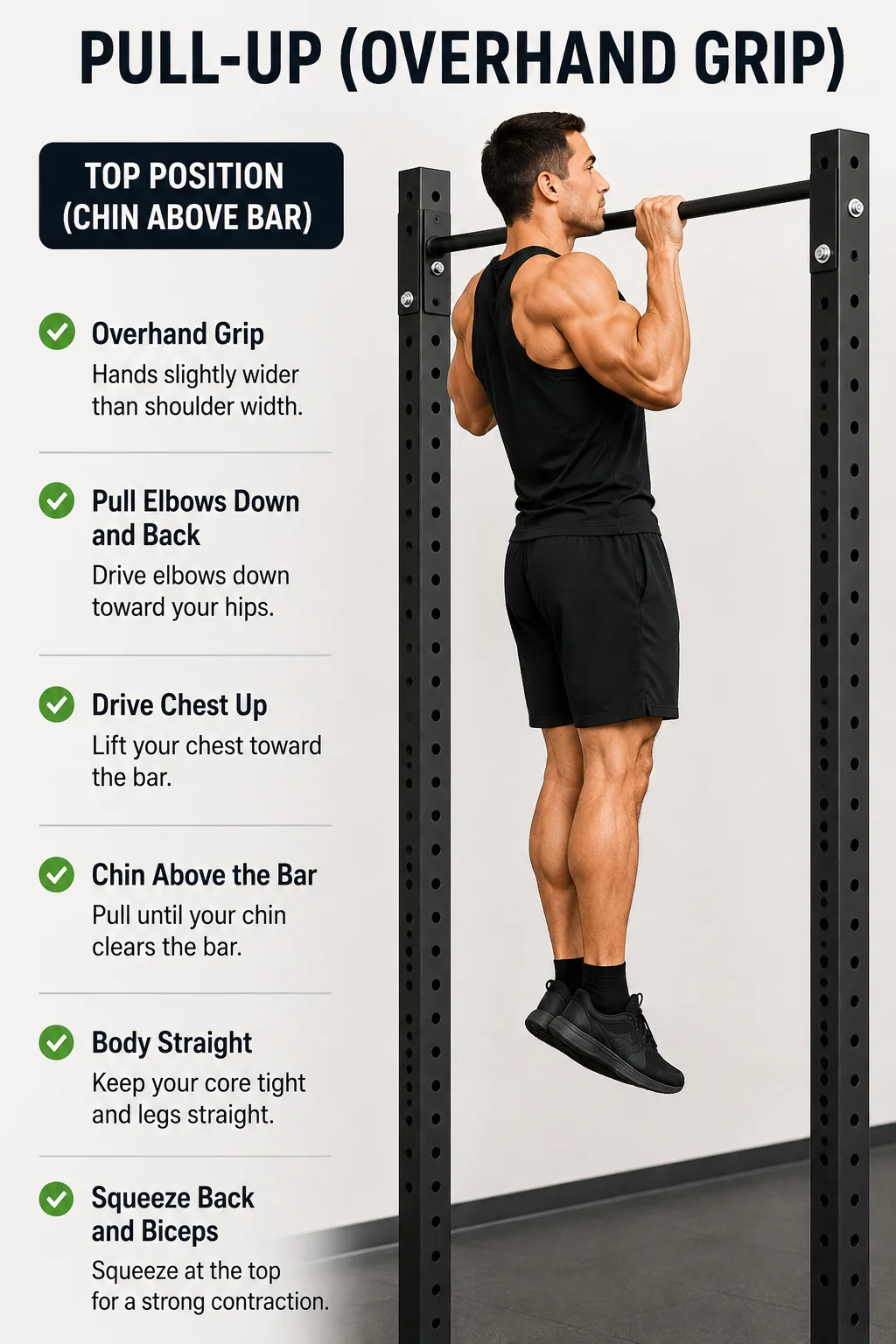
The pull-up uses the same basic movement with an overhand (pronated) grip, shifting slightly more emphasis onto the lats and upper back with less direct biceps assistance.
Muscles Worked
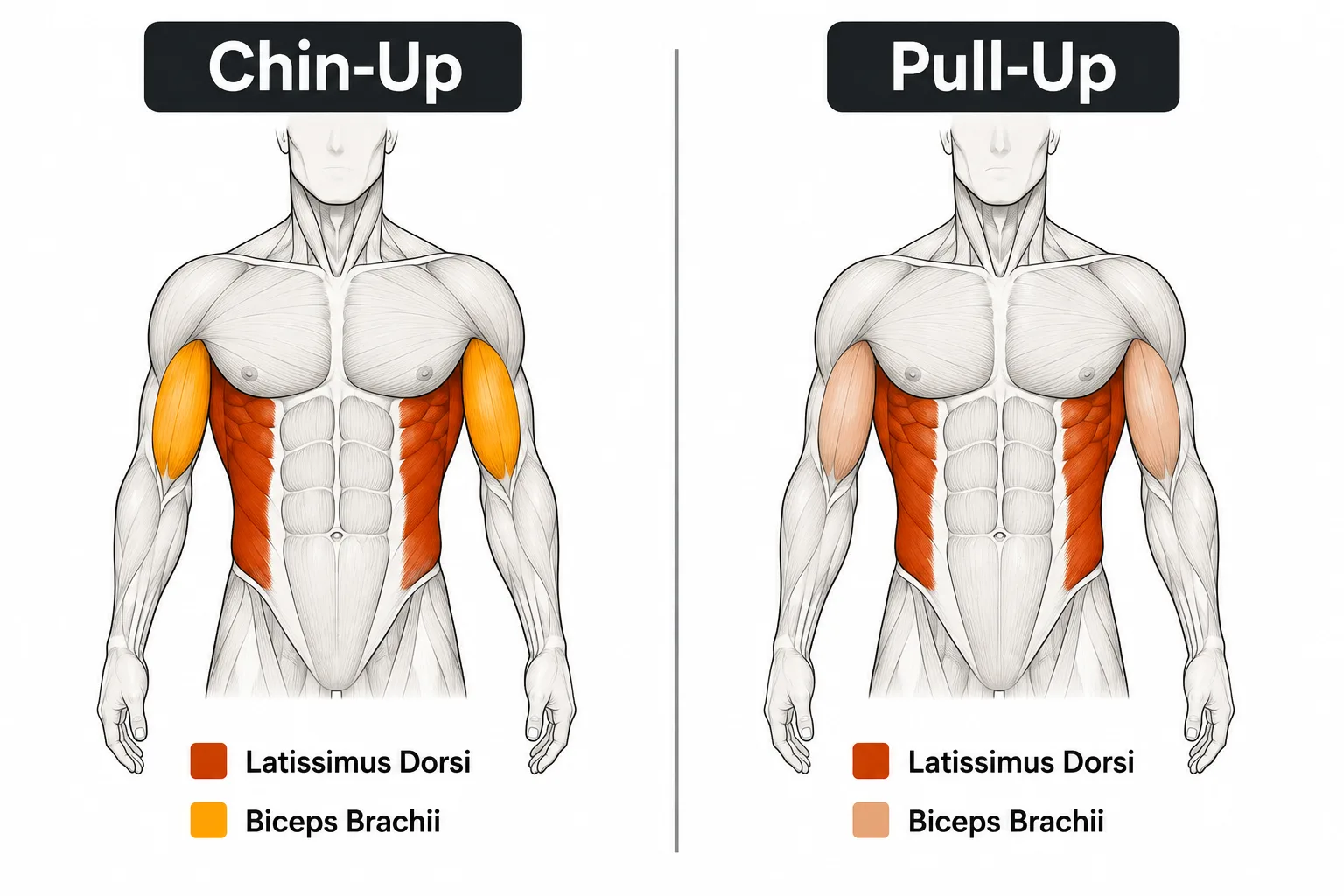
Both exercises primarily target the latissimus dorsi as the main mover. The difference is in secondary emphasis: chin-ups recruit the biceps brachii more directly due to the underhand grip, while pull-ups are considered slightly more back-dominant since the overhand grip reduces the biceps’ mechanical advantage.
Are Chin-Ups Easier Than Pull-Ups?
For most lifters, yes, chin-ups are slightly easier than pull-ups. The underhand (supinated) grip puts the biceps in a mechanically stronger position to assist the lats, meaning you’re drawing on a larger share of your total upper body pulling strength on every rep. That extra biceps contribution is why most people can do more chin-ups than pull-ups at the same bodyweight and effort level.
This doesn’t mean chin-ups are easy or that they’re a lesser exercise, both movements are demanding. But the grip difference is real and measurable: expect to manage roughly 1-3 more reps on chin-ups than pull-ups when all else is equal. This also makes chin-ups the more accessible starting point for beginners who are working toward their first unassisted rep.
Strength Development
Both build genuine vertical pulling strength relative to bodyweight. Most lifters can perform more reps on chin-ups than pull-ups at the same effort level due to the biceps assistance, but this doesn’t mean chin-ups are “easier” in a meaningful training sense, both should be progressed the same way, through added reps, resistance, or weight.
Muscle Growth
Both are excellent for building the back. Chin-ups offer a slight edge for combined back-and-biceps development since they meaningfully load both muscle groups in one movement. Pull-ups keep more of the tension on the back itself, which some lifters prefer if biceps are already well-developed through dedicated curl work.
Beginner Friendliness
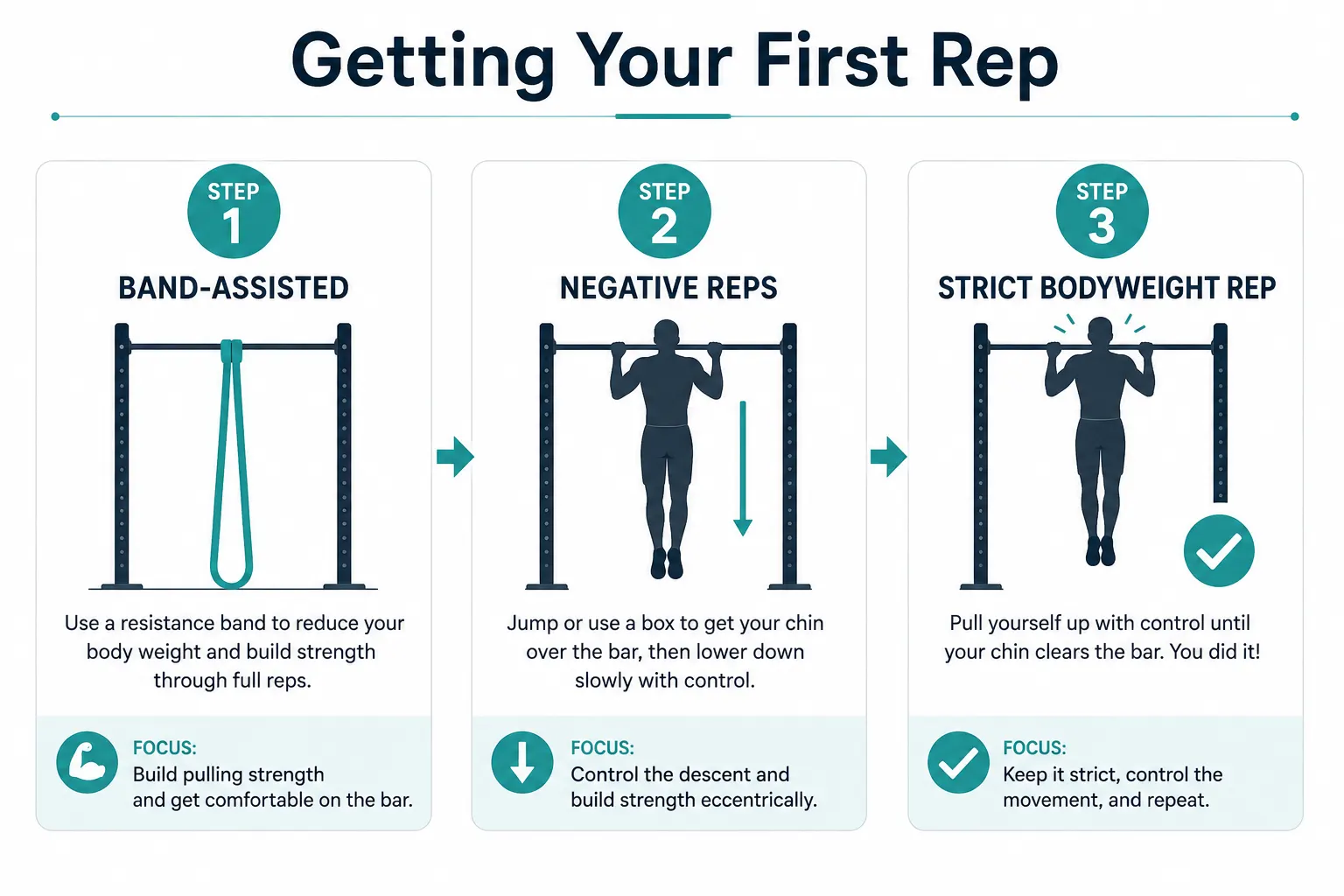
Chin-ups are often the easier entry point for beginners since the added biceps assistance can make the difference between achieving a first rep or not. Both still require significant relative bodyweight strength compared to most other exercises, so assisted variations (bands or an assisted pull-up machine) are a practical stepping stone for either.
Safety
Both carry a similar, relatively low risk profile when performed with good form. Some lifters find the underhand grip in chin-ups slightly more irritating to the elbows over high volume, while pull-ups can strain the shoulders if performed with kipping or excessive body swing. A neutral grip is a good option for anyone who finds either grip uncomfortable.
Programming
Both fit the same role in a program, as the primary or secondary vertical pulling movement, typically in the 3-12 rep range, trained 2-3 times per week. Alternating between chin-ups and pull-ups across sessions or weeks is a simple, effective way to get the benefits of both grips without needing extra programming complexity.
Common Mistakes
Chin-up mistakes: relying too much on the biceps and not achieving full lat engagement at the top and bottom of the rep. Fix this by focusing on pulling the elbows down and back, not just curling the body up.
Pull-up mistakes: using kipping or excessive body swing to complete reps, and not achieving a full range of motion. Fix these by controlling the movement strictly and using assistance rather than sacrificing form.