Reverse Crunches vs Leg Raises: Which Builds Better Lower Abs?

Both exercises target the lower abs through hip and pelvic movement, but the hanging leg raise adds significant grip, shoulder, and hip flexor demand that makes it considerably more challenging than the floor-based reverse crunch.

Which Is Better?

In a reverse crunches vs leg raises comparison, hanging leg raises are more advanced and challenging for lower abs, hip flexors, and grip, while reverse crunches are easier and more beginner-friendly for direct lower ab work. If you are deciding between leg raise vs reverse crunch as a beginner, start with reverse crunches and progress to hanging leg raises as your core and grip get stronger.

Exercise Overview

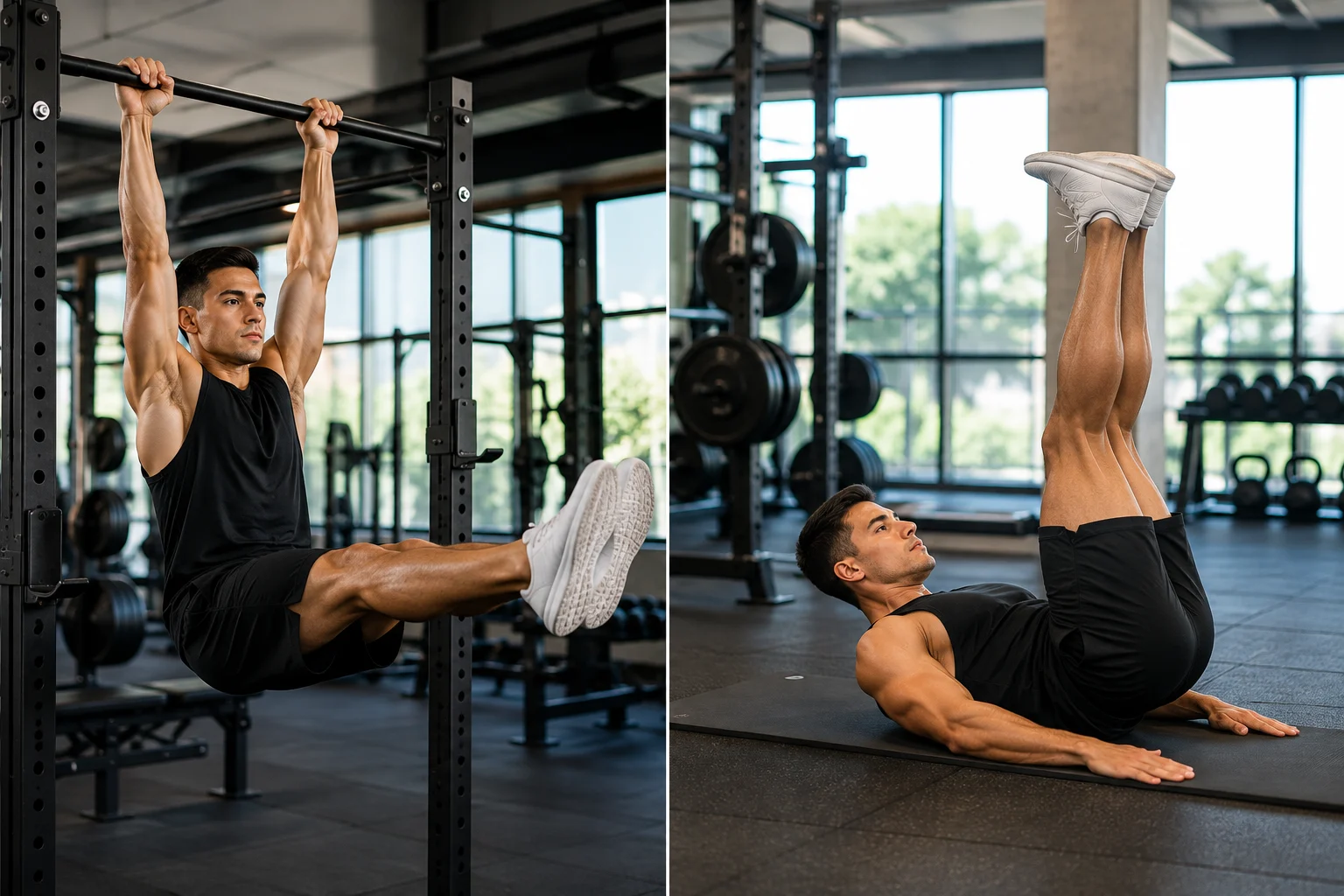
Hanging leg raise and reverse crunch shown side by side for exercise comparison

The hanging leg raise is performed hanging from a pull-up bar (or supported in a captain’s chair), raising the legs — bent or straight — up toward the chest using the lower abs and hip flexors, while resisting the tendency to swing.

The reverse crunch is performed lying on the back, using the lower abs to curl the hips and pelvis up while drawing the knees toward the chest, without needing to hang or grip anything.

If you searched for leg raise vs reverse crunch, this comparison uses the hanging leg raise as the leg raise variation because it is the most common progression compared against reverse crunches.

The pull-up guide covers the bar setup and grip technique relevant to performing hanging leg raises safely.

My (author) personal take: Hanging leg raises exposed my grip as the actual weak link, not my abs. My forearms gave out around rep 8 long before my lower abs felt worked. Switching to straps for a few weeks so grip wasn’t the limiter let me feel the exercise properly, and reverse crunches became the better daily option on days I’d already fatigued my grip from pulling work earlier in the session.

Muscles Worked
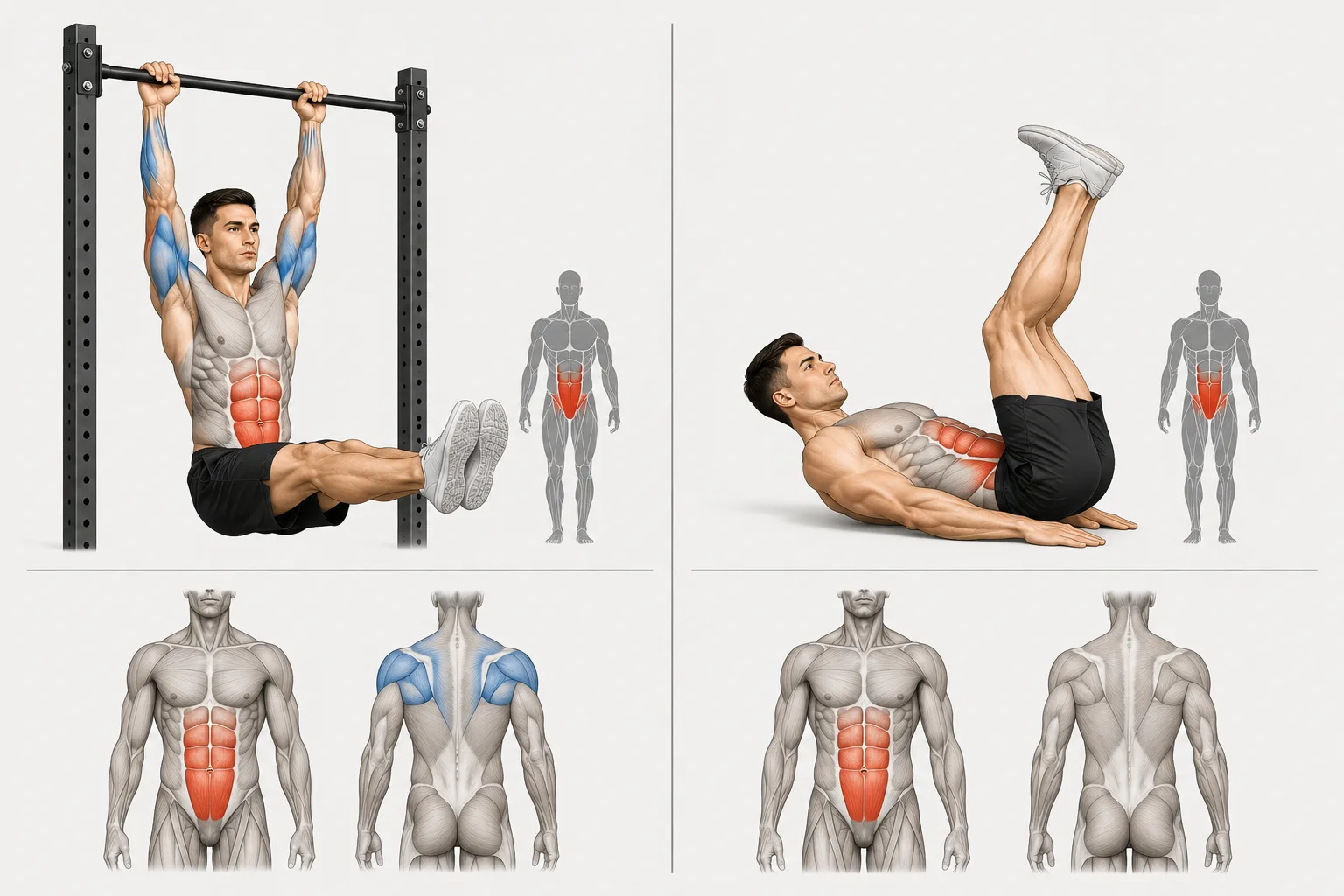
Lower ab and hip flexor muscle activation comparison for hanging leg raise versus reverse crunch

Both exercises primarily target the lower rectus abdominis and hip flexors. Hanging leg raise adds significant involvement from the forearms/grip, shoulders, and lats to stabilize the body while hanging, making it a more complete upper-body-engaging exercise. Reverse crunch isolates the lower abs and hip flexors more directly, with minimal other muscle involvement.

Strength Development

Hanging leg raise builds considerably more overall strength, since it demands grip endurance, shoulder stability, and hip flexor/core strength together through a large range of motion. Reverse crunch builds more localized lower ab and hip flexor strength without the added upper-body demands, making it a good foundational exercise before progressing to hanging variations.

Muscle Growth

Both are effective for lower ab hypertrophy. Hanging leg raise typically provides a greater growth stimulus due to the increased range of motion and resistance from full leg leverage, especially in the straight-leg variation. Reverse crunch still effectively targets the lower abs, and remains a valuable option for those without access to a bar or when a lower-demand session is preferred.

Beginner Friendliness
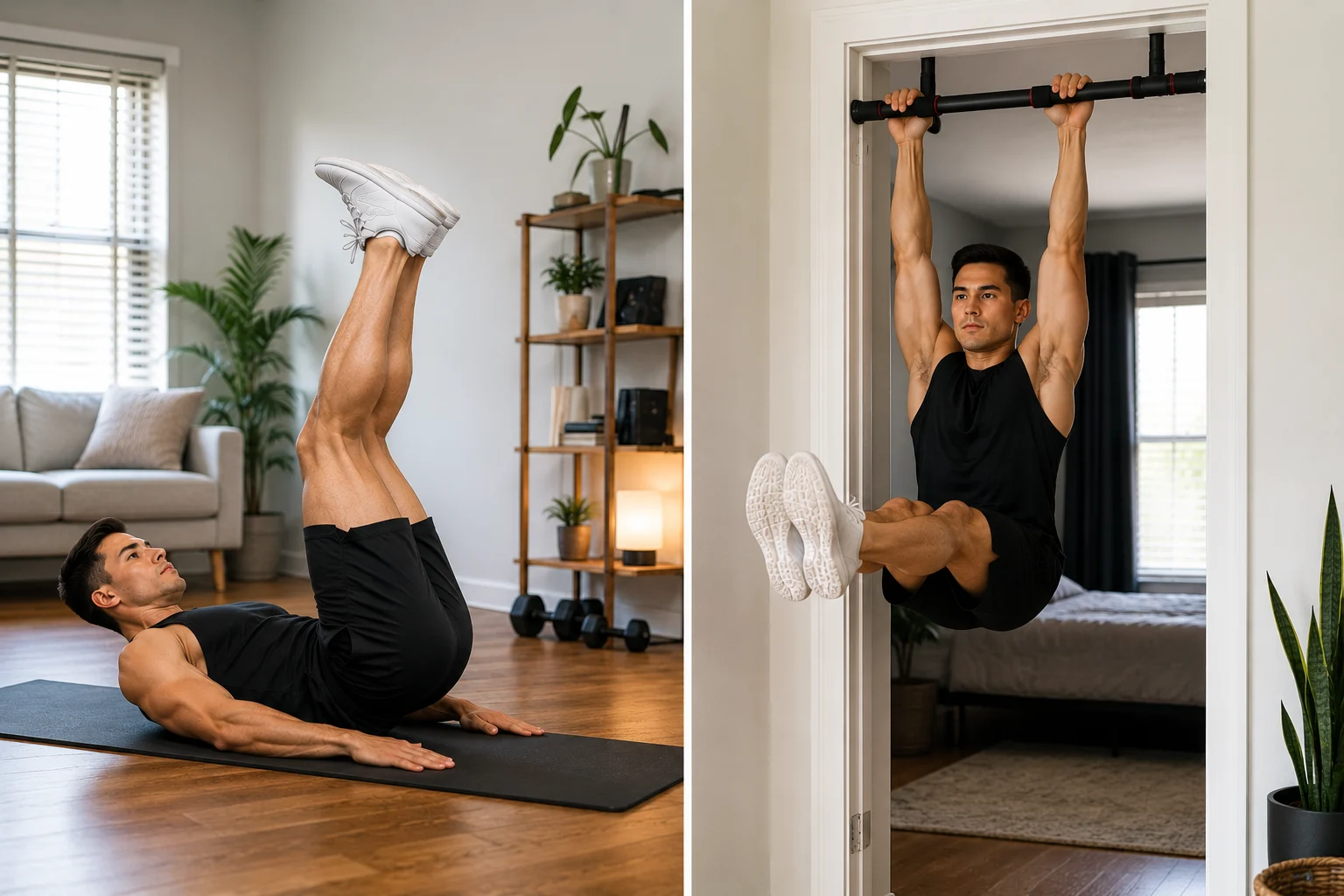
Home setup for reverse crunch on yoga mat and hanging leg raise on doorway pull-up bar

Reverse crunch is considerably more beginner-friendly, requiring no equipment and minimal technical skill. Hanging leg raise is an advanced exercise that requires adequate grip and shoulder strength — beginners can start with a bent-knee variation or a captain’s chair to reduce the demand while building toward the full version.

Safety

Reverse crunch is very safe due to its supported, floor-based position. Hanging leg raise carries a slightly higher risk of shoulder strain if the body swings excessively or the shoulders aren’t stabilized properly — using controlled movement and avoiding momentum reduces this risk significantly.

Programming
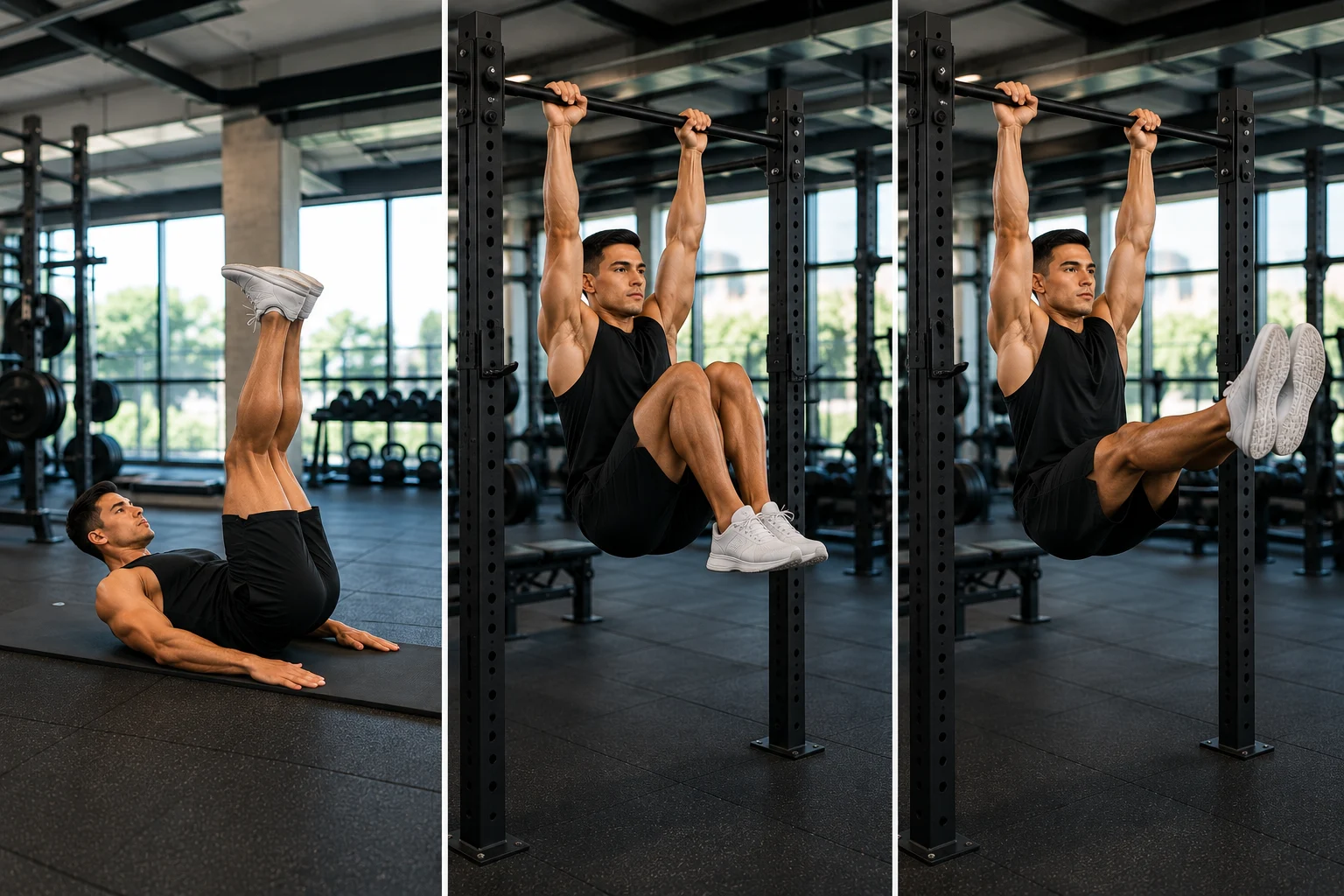
Progression from reverse crunch on floor to bent-knee hanging raise to full hanging leg raise

Use reverse crunch as a beginner-friendly lower ab exercise in the 12-20 rep range, 2-4 times per week. Progress to hanging leg raise (starting with bent knees) as core and grip strength improve, training in the 8-15 rep range with a focus on controlled, momentum-free reps.

Tracking your reps and progression on both movements over time is what makes the transition reliable. Sleet makes it easy to log core work and see your progress week to week.

Common Mistakes
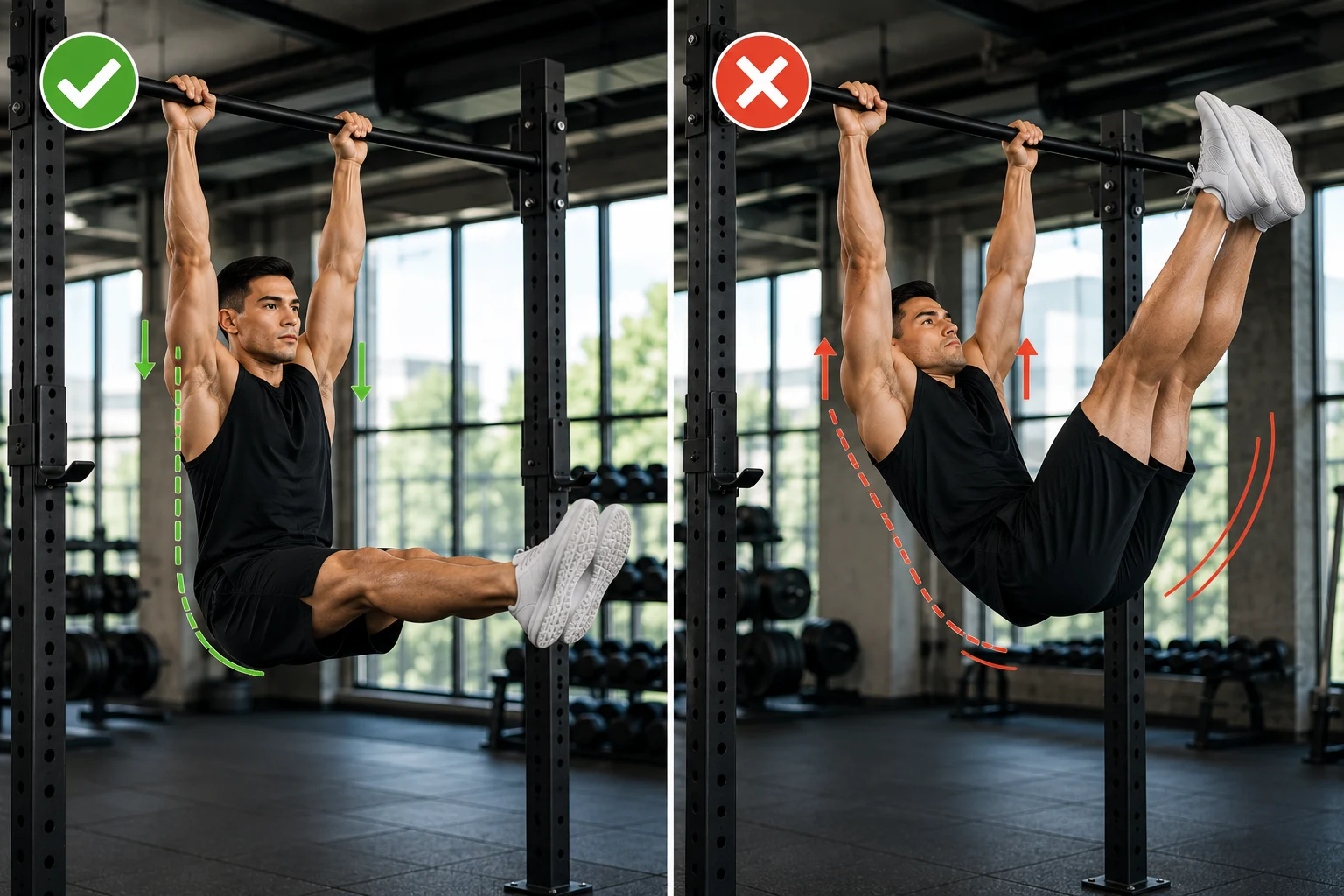
Correct versus incorrect hanging leg raise form showing how to avoid shoulder swing

Hanging leg raise mistakes: using momentum to swing the legs up and letting the body swing on the bar. Fix these by initiating the movement with a pelvic tilt and controlling both the raise and lowering phases.

Reverse crunch mistakes: using the hip flexors and momentum to swing the legs instead of curling the pelvis with the lower abs. Fix this by focusing on a slow, controlled pelvic tilt rather than simply lifting the legs.


Frequently Asked Questions

Which is better for lower abs — hanging leg raise or reverse crunch?

Both effectively target the lower abs. Hanging leg raise offers a greater range of motion and additional resistance from leg leverage, making it more advanced, while reverse crunch is a great beginner-friendly starting point that isolates the same muscles with less overall demand.

Is hanging leg raise harder than reverse crunch?

Yes, significantly. Hanging leg raise requires grip strength, shoulder stability, and control against swinging, in addition to core strength, making it considerably more demanding than the floor-based reverse crunch.

Can beginners do hanging leg raise?

Beginners can start with bent-knee hanging raises or use a captain's chair with back support to reduce the grip and shoulder demand, progressing to full straight-leg hanging raises over time.

Why can't I feel reverse crunch in my abs?

This is often because the hip flexors are doing most of the work instead of the abs. Focus on curling the pelvis up and using the lower abs to lift the knees toward the chest, rather than just swinging the legs.

How do I progress from reverse crunch to hanging leg raise?

A good progression is: floor reverse crunch, then bent-knee hanging raise, then straight-leg hanging raise, and finally weighted hanging leg raise as your core and grip strength improve.

Leg raises vs sit ups: which is better for abs?

Leg raises usually bias the lower abs and hip flexors more, while sit ups train broader trunk flexion with more upper-ab and hip flexor involvement. For most people, leg raises are better for lower-ab focus, and sit ups can be added as a secondary trunk-flexion movement when performed with good control.

Does hanging leg raise work the grip too?

Yes, holding onto the bar throughout the set builds significant grip endurance alongside the core and hip flexor benefits, making it a valuable dual-purpose exercise.

Is reverse crunch safe for lower back pain?

Reverse crunch is generally gentle on the back due to its floor-supported position, but if you have existing lower back issues, keeping the movement controlled and avoiding excessive momentum is important.

How many reps of hanging leg raise should I do?

8-15 controlled reps per set is a good target range, prioritizing full range of motion and control over rushing through more reps with momentum.

What's the difference between hanging leg raise and hanging knee raise?

Hanging knee raise bends the knees throughout the movement, reducing the demand on the hip flexors and lower abs, making it an easier regression of the full straight-leg hanging leg raise.

Can I use ankle weights with reverse crunch?

Yes, adding light ankle weights is a simple way to progressively overload reverse crunch once bodyweight reps become too easy.

Why do my hip flexors get more sore than my abs from these exercises?

If hip flexors dominate, it usually means the movement is being driven by hip flexion rather than pelvic/ab-driven flexion. Focus on curling the pelvis and lower spine rather than just lifting the legs with the hips.

Is a captain's chair easier than a hanging bar for leg raises?

Yes, the back support on a captain's chair removes the grip and shoulder stability demand, making leg raises more accessible while still training the lower abs effectively.

How often should I train lower abs with these exercises?

2-4 times per week is a common frequency for meaningful lower ab development, adjusted based on your overall core training volume and recovery.

Can reverse crunch be a stepping stone to hanging leg raise?

Yes, mastering the reverse crunch pattern (pelvic tilt and lower ab-driven hip flexion) on the floor builds a strong foundation before progressing to the more demanding hanging variation.

Is hanging leg raise better for building a visible lower ab 'V-cut'?

It can contribute more due to the greater range of motion and resistance, but visible ab definition ultimately depends primarily on overall body fat levels achieved through diet, regardless of which lower ab exercise you choose.

Raaj, author of SleetGymTracker blog

Raaj

Hi, I am Raaj, the author of this blog. I have been into fitness for 7 years and have trained over 40 people in-person, mostly complete beginners. I started lifting at 17 with zero idea what I was doing and spent years figuring out what actually works. Everything I write comes from that experience. I built SleetGymTracker because I wanted a tracker that takes progressive overload seriously, and a blog that gives straight answers without the fluff. If something is unclear or you want to reach out, contact me at raaj@sleetgymtracker.com

Track Whichever One You Choose With Sleet

Whether you go with Hanging Leg Raise or Reverse Crunch, Sleet logs every set, rep, and weight automatically, so you always know exactly when to add weight next — no spreadsheet required.

Get it on Google Play