Cable crunches are one of the best loaded abdominal movements you can keep in a long-term program. They are easy to set up, simple to progress, and very effective when your reps are controlled.
Most lifters still miss out on results because they do not perform cable crunches properly. They usually go too heavy, hinge at the hips, and lose the exact trunk-flexion pattern that makes this exercise work.
This guide covers how to do cable crunches, how to fix cable crunches form, how to choose weight, and what to do if you train at home.
What Are Cable Crunches?
Cable crunches are a weighted trunk-flexion exercise done with a high pulley and rope. You kneel or stand, hold the rope near your head, and curl your ribcage toward your pelvis.
If you searched what are cable crunches, think of them as crunches with measurable resistance. That is why they are popular for lifters who want stronger abs and clearer progression.
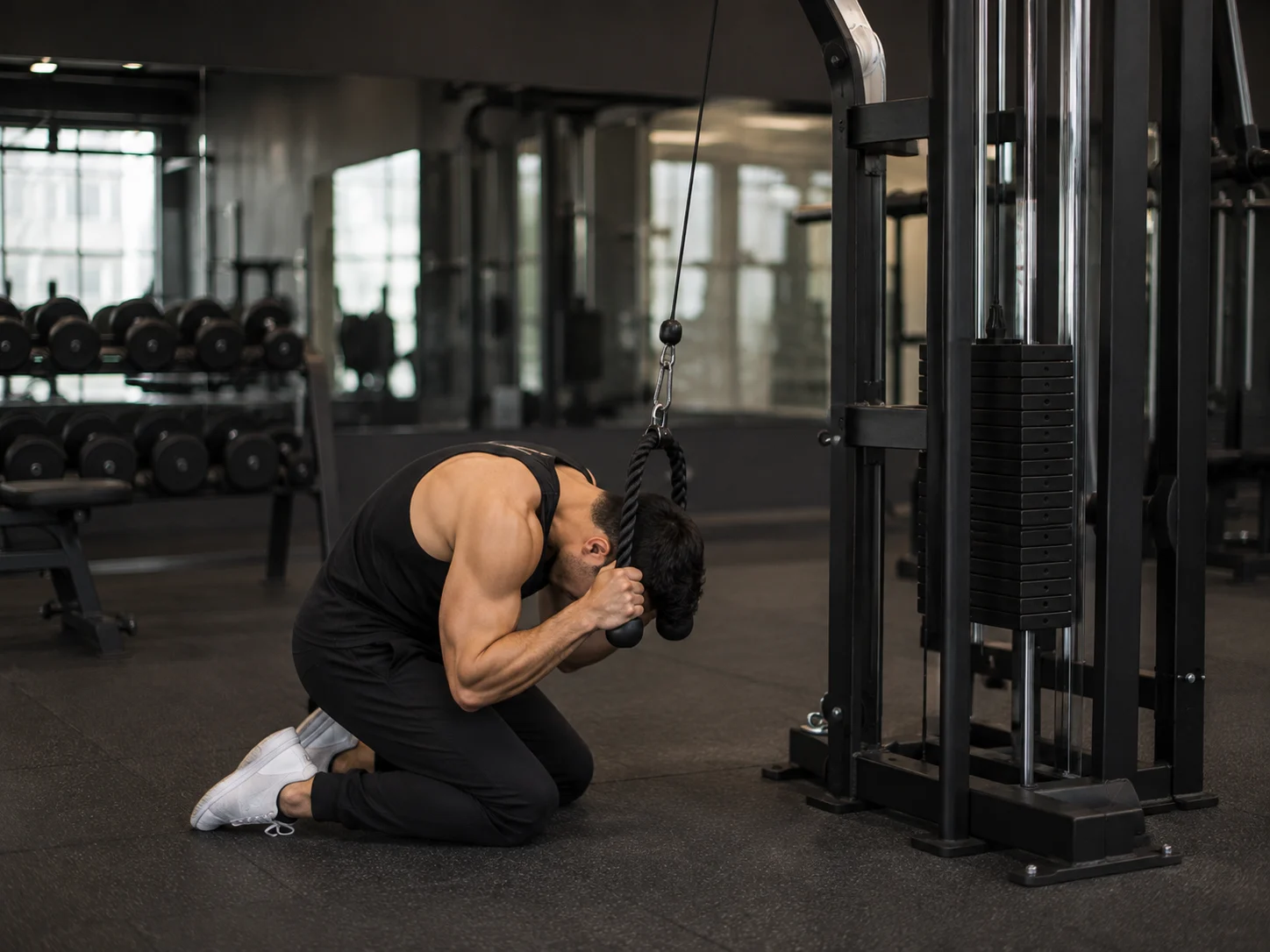
Correct kneeling setup: rope near temples, pulley at top, tension present before rep one.
Cable Crunches Muscles Worked
Direct answer: cable crunches muscles worked are mainly the rectus abdominis, with help from obliques and deep core stabilizers.
Primary targets:
- Rectus abdominis
- Internal and external obliques
Secondary support:
- Transverse abdominis
- Hip stabilizers
- Lats and arms as stabilizers
If your arms or hip flexors dominate, your cable crunches form usually needs adjustment.
How To Set Up Cable Crunches On The Machine
Direct answer: set the pulley high, attach rope, kneel at a distance that keeps top-position tension, and keep hands by your temples.
- Set cable at the highest point.
- Attach rope handle.
- Choose a manageable load.
- Kneel about one to two feet from the stack.
- Grab rope ends and bring hands beside temples.
- Brace before first rep.
This setup solves most early issues people have when learning how to set up cable crunches.
How To Do Cable Crunches Properly
Direct answer: curl the torso under control, pause, then return slowly without losing tension.
- Inhale and brace at the top.
- Exhale as you crunch.
- Move ribs toward pelvis.
- Keep hips mostly fixed.
- Pause briefly at peak contraction.
- Return slowly to neutral.
- Repeat for 8 to 20 strict reps.
If you searched how to do cable crunches properly or how to do cable ab crunches, these are the exact movement steps to master.
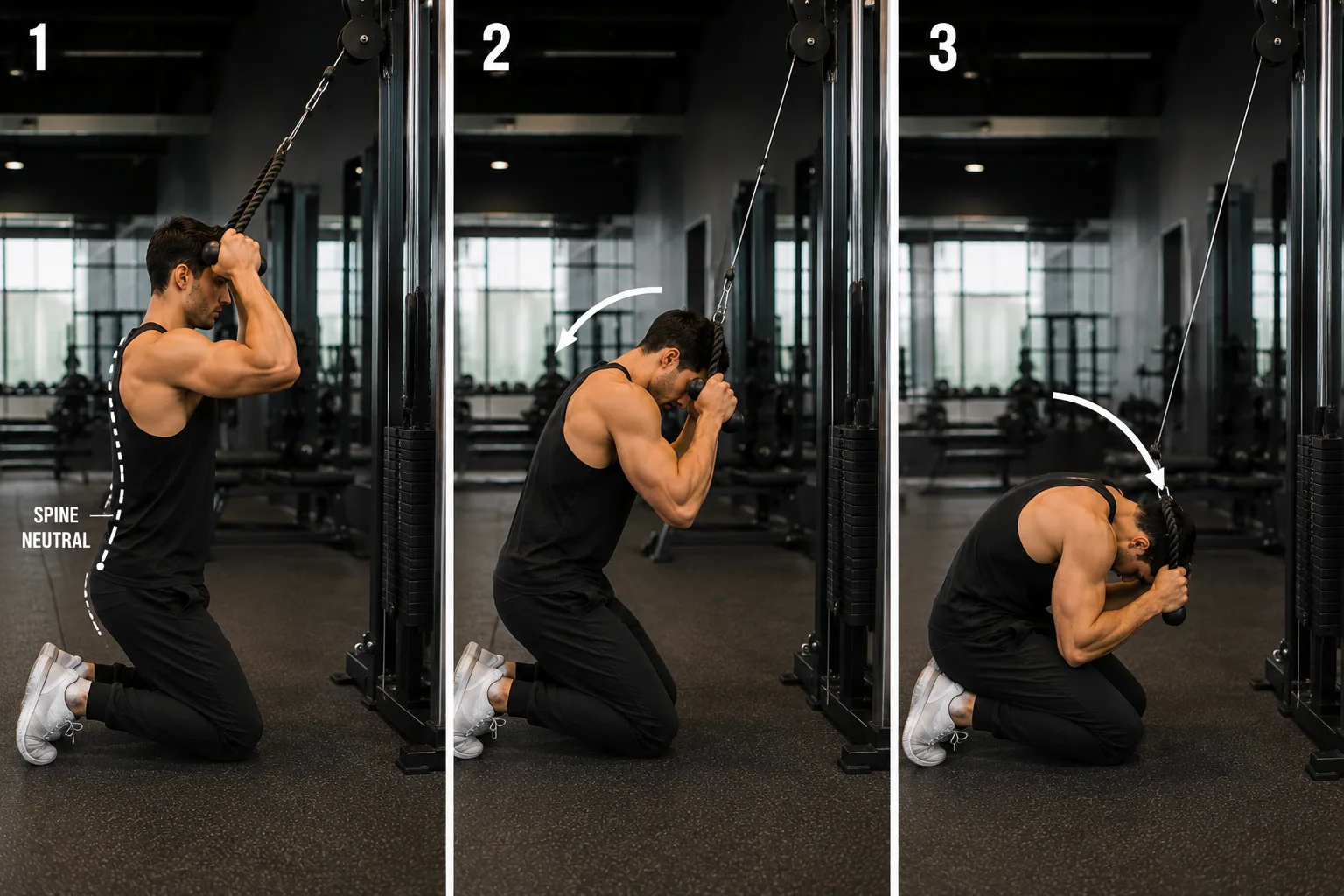
Form sequence: top position with torso extended, mid-rep curl, peak contraction with ribs near pelvis.
Cable Crunches Form Checklist
Use this checklist before each set:
- Hands stay by temples
- Arms hold rope but do not pull it down
- Torso flexes segment by segment
- Hips do not hinge aggressively
- Top and bottom both stay under tension
- Eccentric is controlled
A practical tempo for better ab recruitment is 2-1-3:
- 2 seconds down
- 1 second squeeze
- 3 seconds up
Why I Do Not Feel My Cable Crunches
Direct answer: if you do not feel your cable crunches, you are likely using too much weight and moving with hips instead of torso.
Fixes in order:
- Reduce load by 20 to 30 percent.
- Slow every rep.
- Start each rep with slight posterior pelvic tilt.
- Cue ribs to pelvis.
- Pause peak contraction for one second.
- End set with 1 to 3 reps in reserve.
This troubleshooting sequence resolves most why i dont feel my cable crunches problems in one or two sessions.
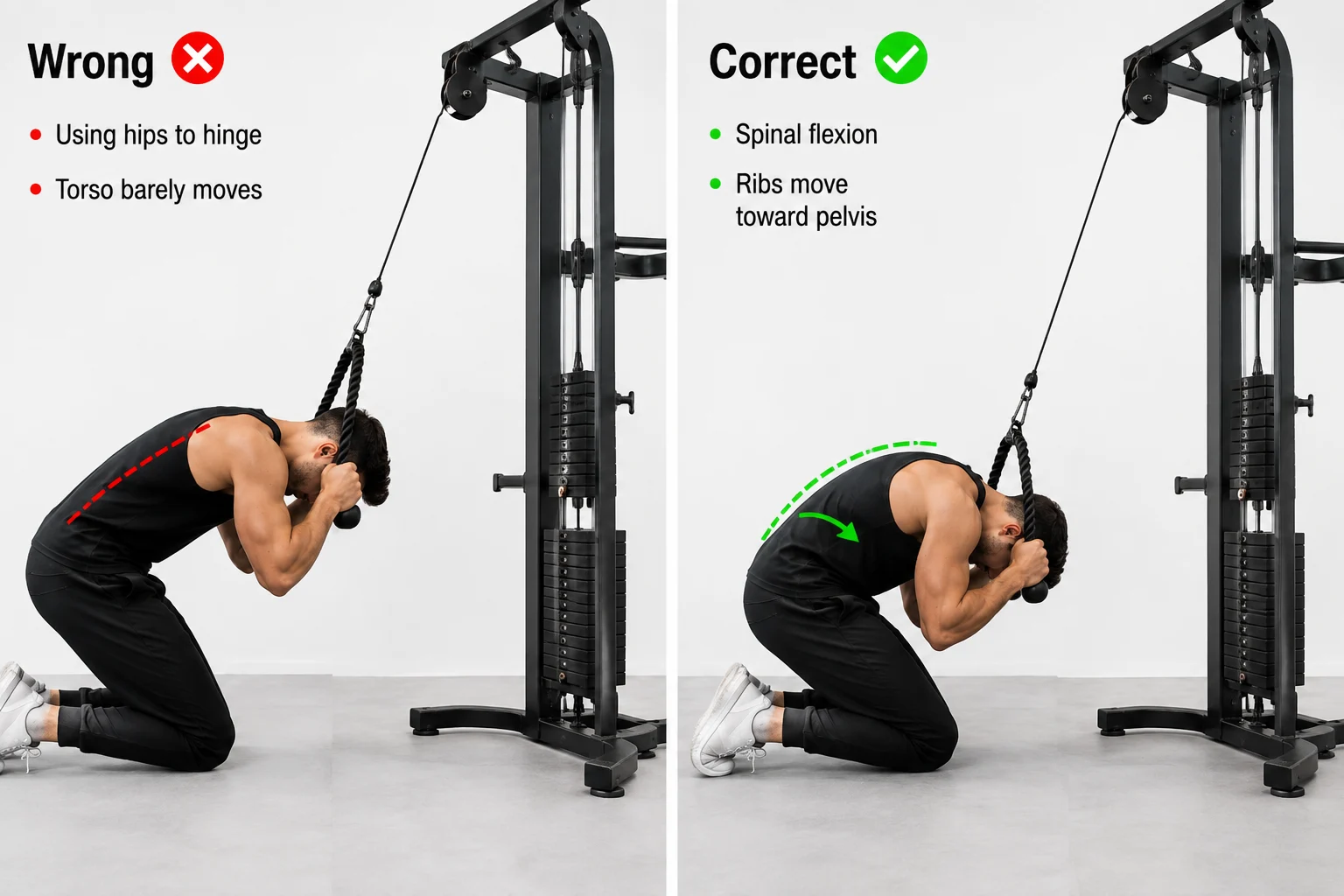
Left: hip hinge error where torso barely moves. Right: correct spinal flexion with ribs curling toward pelvis.
Weighted Cable Crunches And Heavy Cable Crunches
Weighted cable crunches are excellent when progression stays technical.
Use double progression:
- Keep weight constant until all sets reach top reps.
- Increase one stack increment.
- Repeat.
Example:
- Week 1: 3 x 10
- Week 2: 3 x 12
- Week 3: 3 x 15
- Week 4: add load, return to 3 x 10
For broader progression planning, use What Is Progressive Overload? and How to Track Progressive Overload.
Kneeling, Standing, And Oblique Cable Crunches
Kneeling cable crunches
Best default for most lifters because setup is stable and easier to learn.
Standing cable crunches
Good progression for lifters with better balance and trunk control.
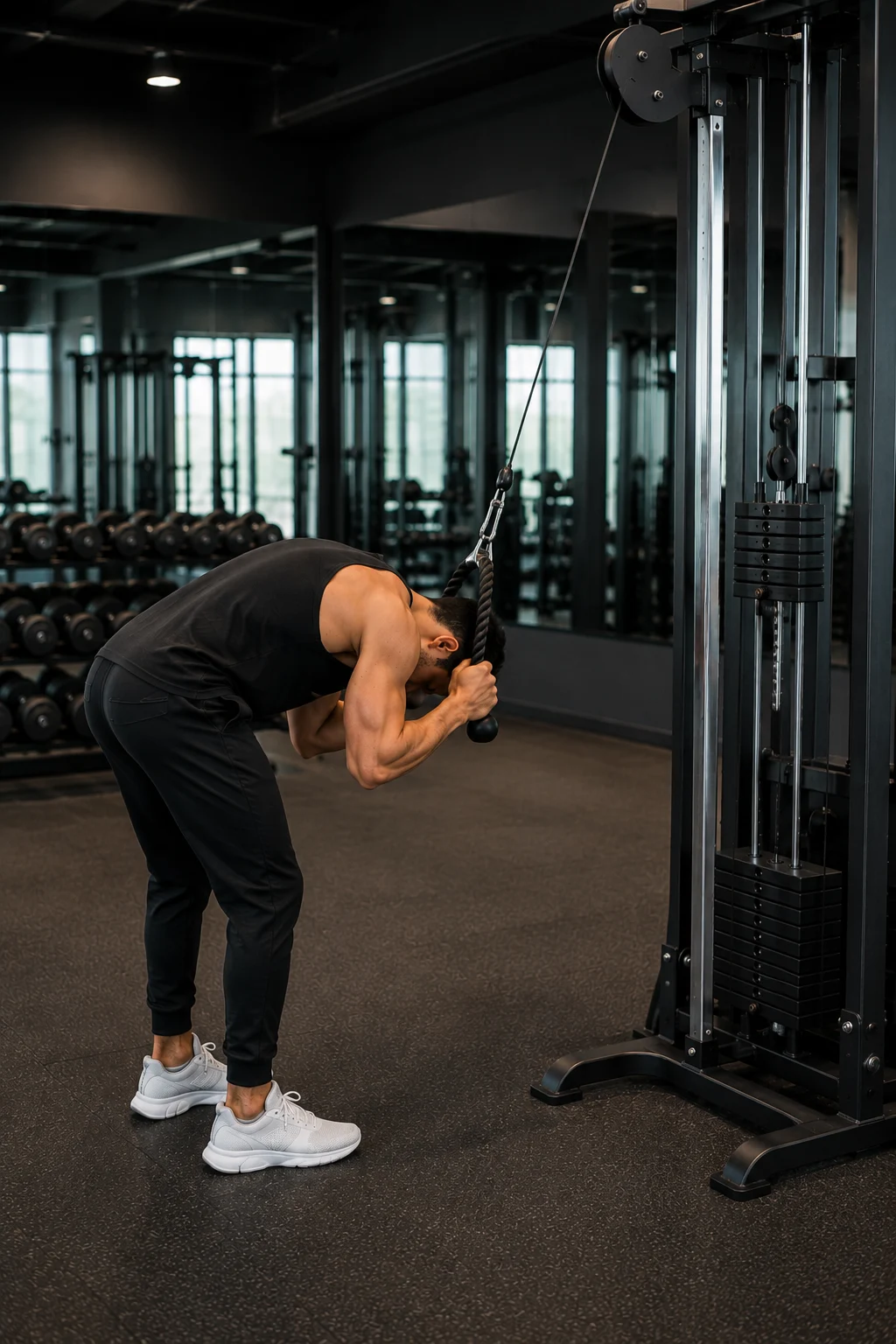
Standing variation: feet hip-width apart, rope from high pulley held at temples, torso curling toward floor.
Oblique cable crunches
Useful for side-core development when programmed with moderate volume.
Do Cable Crunches Work Lower Abs?
Direct answer: yes, cable crunches work lower abs, but they also train the full rectus abdominis.
You can increase lower-region emphasis by:
- Maintaining posterior pelvic tilt
- Fully finishing the crunch
- Avoiding rushed reps
For comparison with a stronger lower-ab bias movement, see Hanging Leg Raise vs Reverse Crunch.
Cable Crunches Alternatives At Home And In Gym
Direct answer: cable crunches alternative choices should preserve controlled trunk flexion and progressive overload.
Best cable crunches alternative at home:
- Overhead banded kneeling crunch
- Reverse crunch
- Dead bug with tension
- Hollow-body tuck variations
Best in-gym alternatives:
- Machine crunch
- Decline weighted crunch
- Hanging knee raise
- Ab wheel rollout
If you need cable crunches at home, the overhead band setup is the closest movement match.
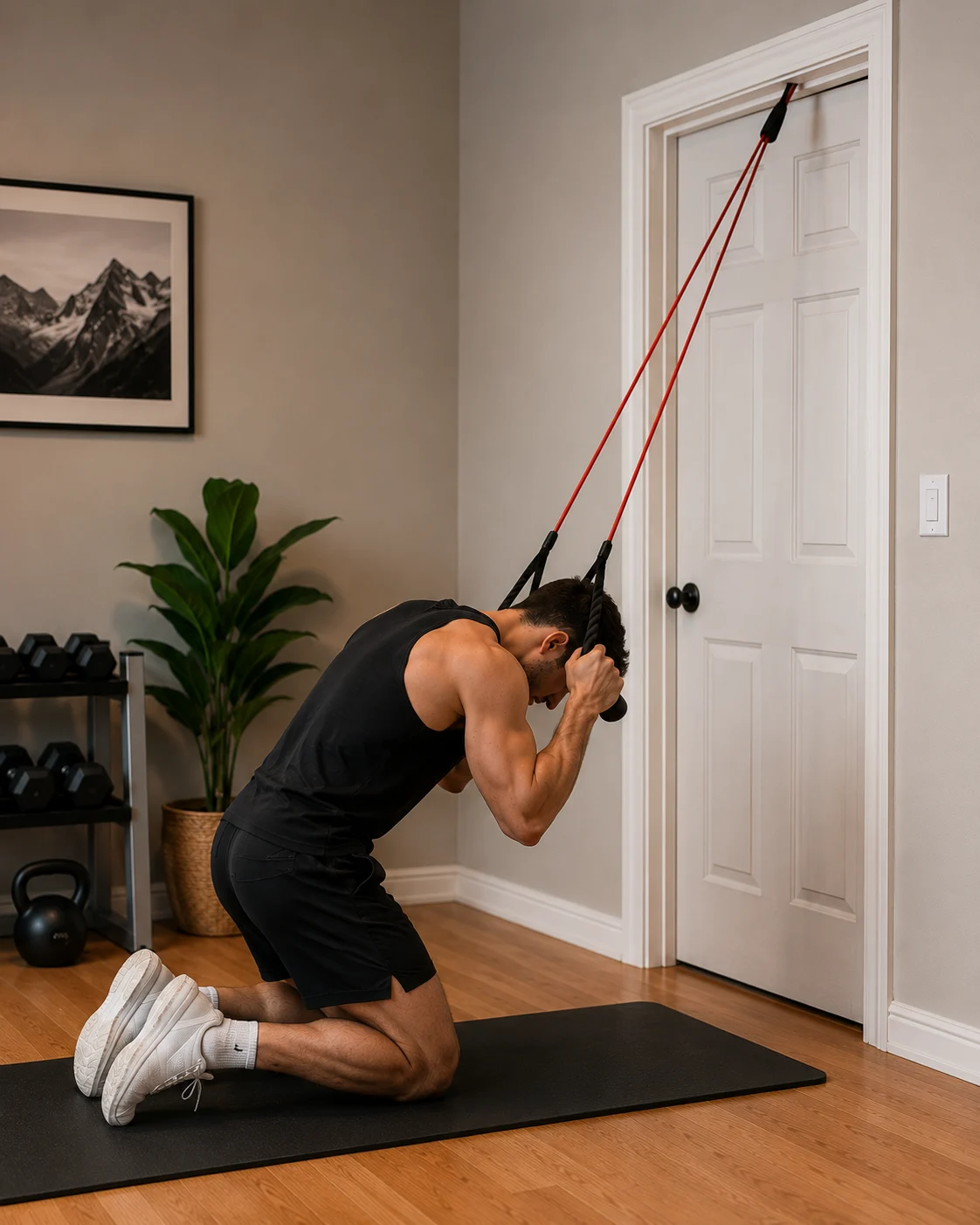
Home setup: band anchored overhead, kneeling crunch pattern, same mechanics as a cable machine rep.
For a full breakdown of how cable crunches stack up against regular bodyweight crunches, see Cable Crunches vs Regular Crunches.
How To Program Cable Crunches For Abs
Direct answer: train cable crunches for abs 1 to 3 times weekly for 2 to 4 sets of 8 to 20 reps.
Programming ranges:
- Technique focus: 12 to 20 reps
- Hypertrophy focus: 10 to 15 reps
- Strength-biased core work: 8 to 12 reps
Rest:
- 60 to 90 seconds for moderate loads
- 90 to 120 seconds for heavier sets
Use Weekly Training Volume Calculator to keep your total hard core sets productive.
Common Cable Crunches Mistakes
- Going too heavy too soon.
- Hinging at hips instead of curling torso.
- Pulling with arms.
- Rushing eccentric phase.
- Losing tension at top.
- Inconsistent range of motion.
If progress stalls, audit these first, then review Progressive Overload Mistakes to Avoid.
Sample Cable Crunch Workouts
Beginner core finisher
- Cable crunches: 3 x 12 to 15
- Reverse crunches: 2 x 12 to 20
- Dead bug: 2 x 8 per side
Intermediate abs session
- Weighted cable crunches: 4 x 10 to 12
- Standing cable crunches: 3 x 12 to 15
- Side plank: 3 x 30 to 45 seconds each side
Advanced trunk block
- Heavy cable crunches: 4 x 8 to 10
- Tempo cable crunches: 2 x 12 to 15
- Oblique cable crunches: 3 x 12 per side
- Hanging knee raise: 3 x 8 to 12
Final Verdict
Cable crunches are one of the highest-value weighted ab exercises for long-term progress. They are effective, scalable, and easy to track when your technique is strict.
Start with kneeling cable crunches, master clean form, then progress to standing and heavier variations. If you train at home, use overhead banded crunches and follow the same progression principles.
For best results, track sets, reps, and load each week. That is what turns cable crunches from random core work into measurable abdominal growth.