Exercise Overview
Cable fly is performed standing or seated between two cable pulleys, bringing the arms together in front of the body in an arc. It usually gives a longer range of motion and more freedom to match your shoulder mechanics.
Pec deck is a seated machine exercise where the arms or forearms press together on pads in a fixed arc. The guided path removes most balance and coordination demands, which makes it one of the easiest chest isolation movements to learn.
For detailed setup and coaching cues, read the dedicated guides for cable fly and pec deck. Both are commonly paired with bench press or dumbbell bench press as finishing volume.
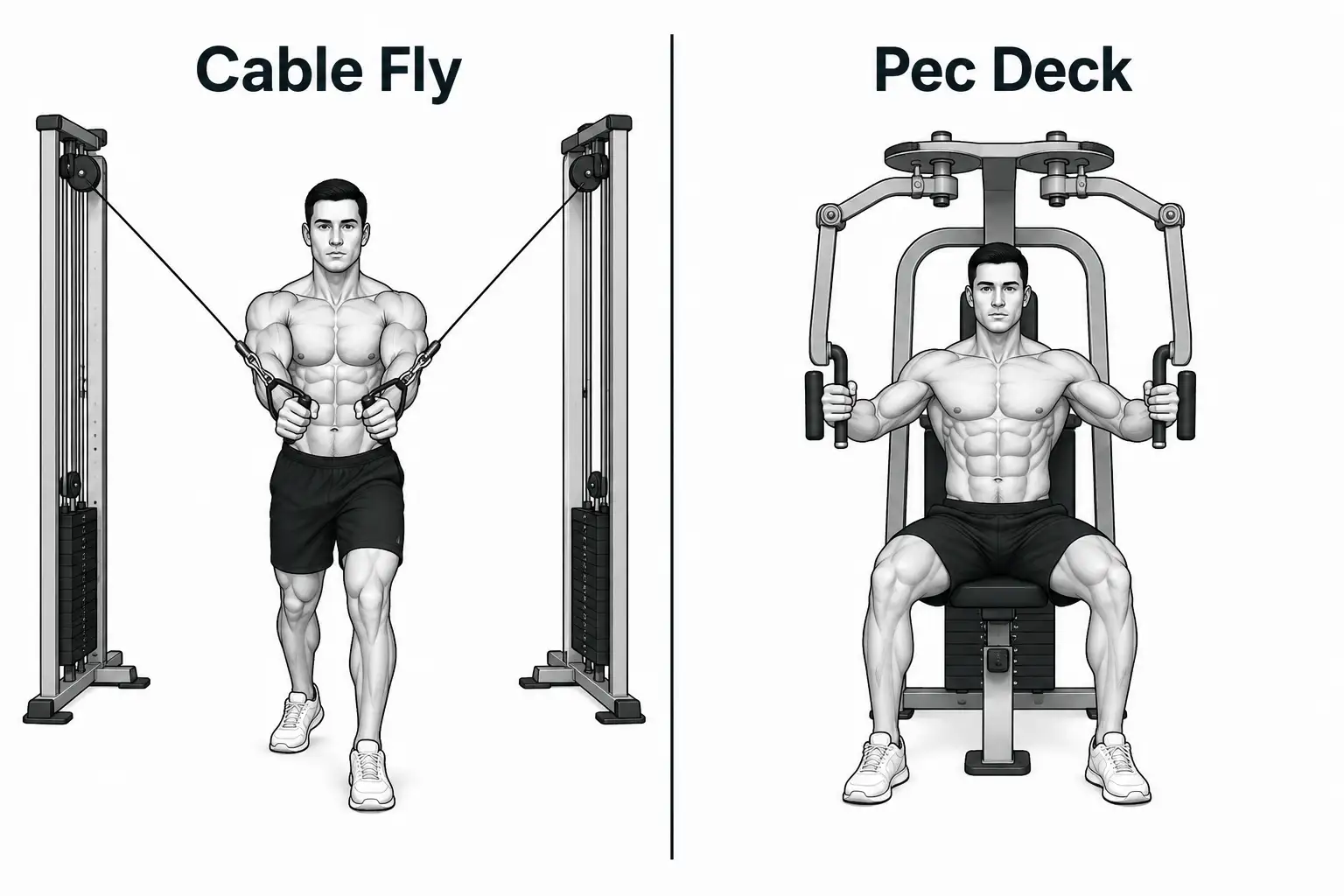
Cable fly (left) requires balance and path control; pec deck (right) guides every rep on a fixed machine arc.
Raaj’s take: I switched to pec deck almost exclusively for about 6 months after a minor shoulder strain from an overly deep cable fly stretch. The fixed arc let me keep training chest volume pain-free the entire time. Once the shoulder settled, I brought cable fly back in but now stop the stretch noticeably short of where I used to take it, which is the actual lesson, not which machine is “better.”
Pec Deck Fly vs Cable Fly, Which Is Better?
If you need one answer, use this: pec deck is usually better for beginners and consistency, cable fly is usually better for angle freedom and stretch-focused hypertrophy work. Neither is universally superior, because they solve different programming needs.
Is Pec Deck Better Than Cable Fly for Chest Growth?
It can be, for lifters who struggle to feel their chest in cable patterns. Pec deck removes setup complexity and often improves rep quality. Cable fly can match or beat it when technique is solid and you use the extra range and cable line of pull well. In both cases, growth mostly depends on weekly hard sets, rep execution, and progression.
Is Pec Deck the Same as Cable Fly?
No. They train the same primary muscle but use different resistance paths and stabilization demands. Think of them as close alternatives, not true duplicates.
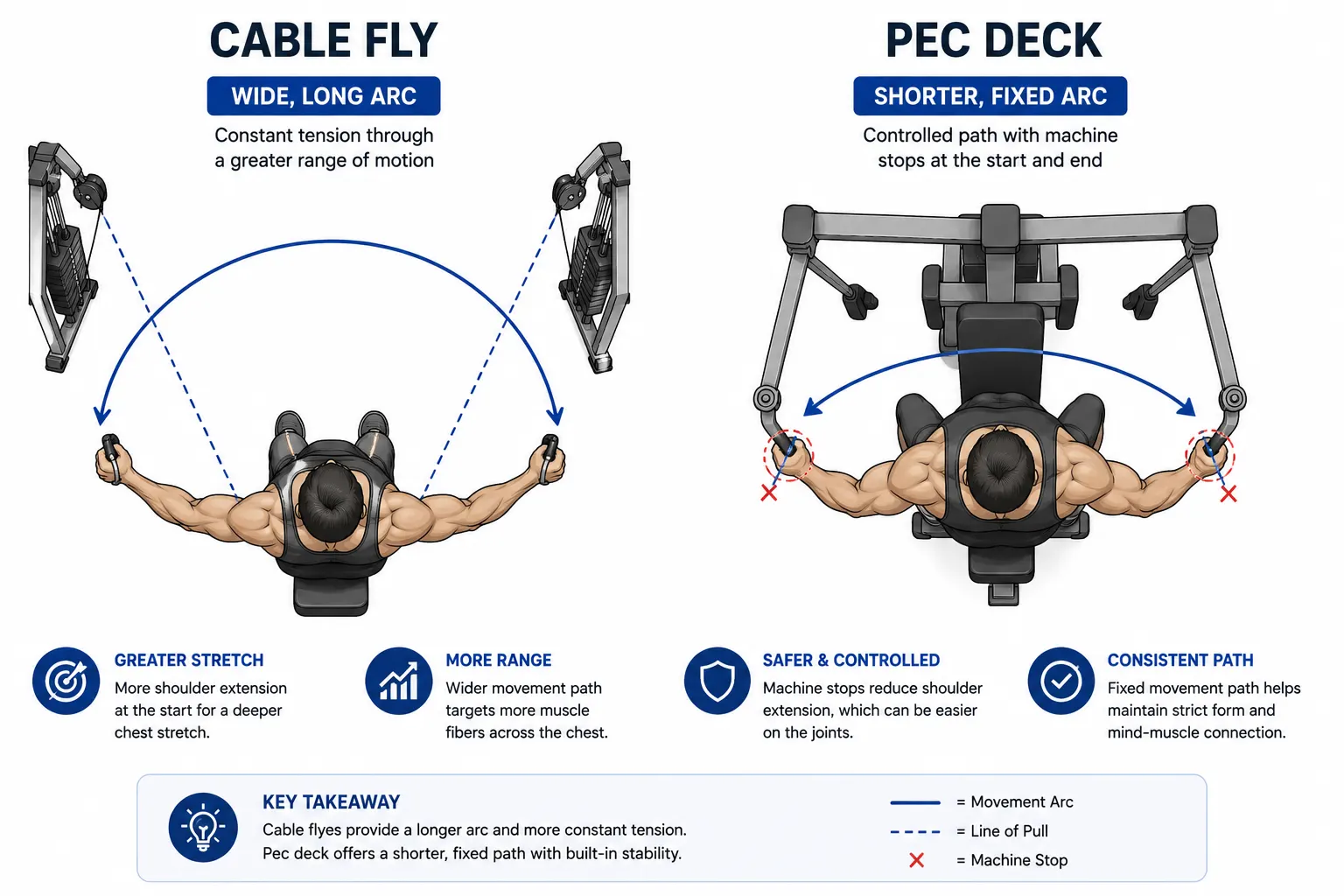
Cable fly allows a wider, deeper arc; pec deck limits range to a shorter, machine-guided path.
Muscles Worked
Both exercises isolate the pectoralis major through horizontal adduction, bringing the arms toward the midline. Neither meaningfully trains the triceps, since elbow angle stays relatively fixed.
Standing cable fly variations also engage the core more, since you need to stabilize your body against the pull of the cables from both sides.
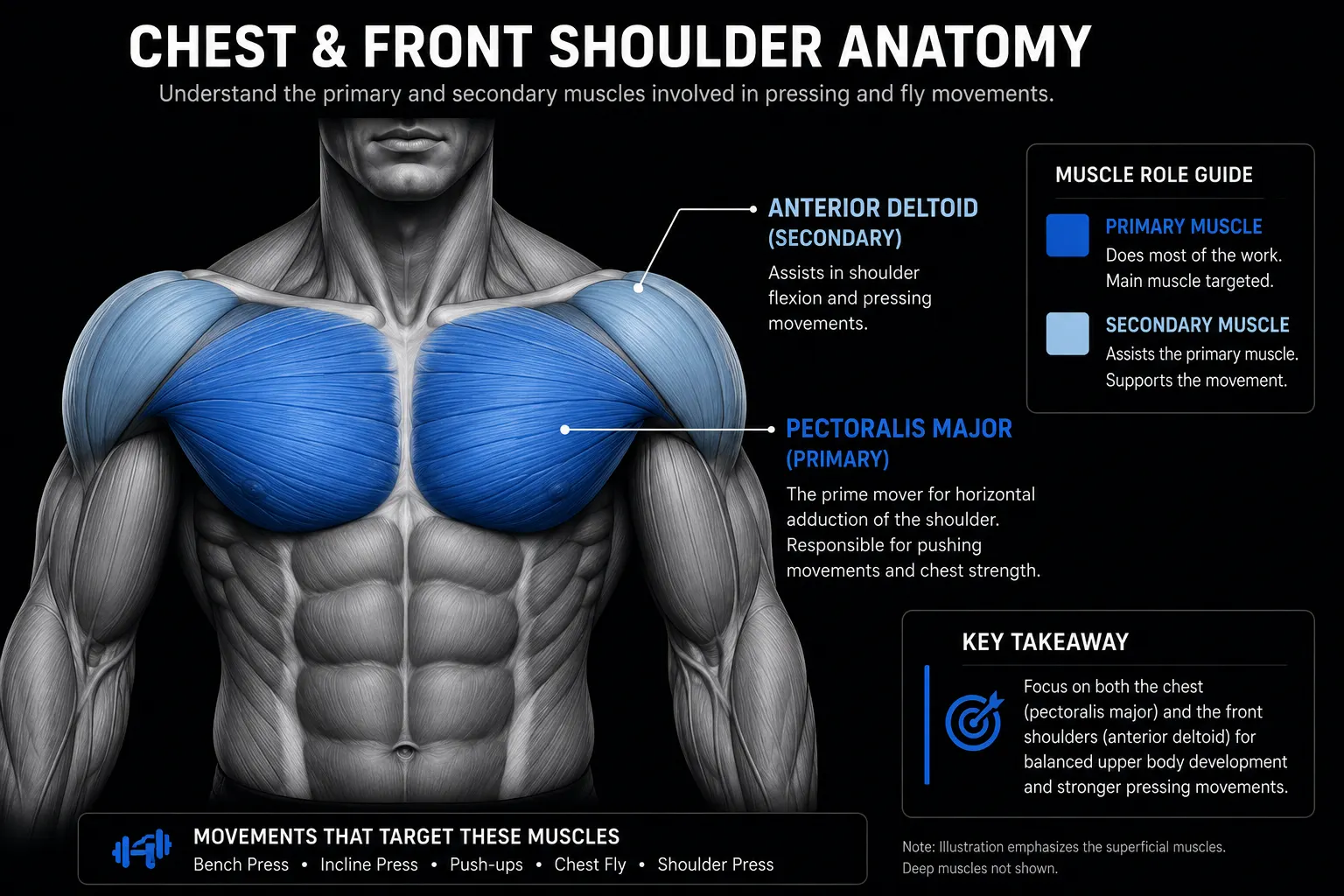
Both exercises target the pectoralis major through horizontal adduction. The anterior deltoid assists as a secondary mover.
Strength Development
Neither exercise is a strength-focused movement. Both use lighter loads and isolate chest more than heavy presses. Strength gains are mostly specific to the fly pattern, not as transferable as compound pressing strength.
Muscle Growth
Both are excellent hypertrophy tools. Cable fly often has a slight edge for stretch-focused work, while pec deck often wins on consistency and ease of execution.
In practice, either exercise works well as chest-finishing volume after your main compound lifts. The practical difference is often small enough that equipment access and rep quality should decide which one you run.
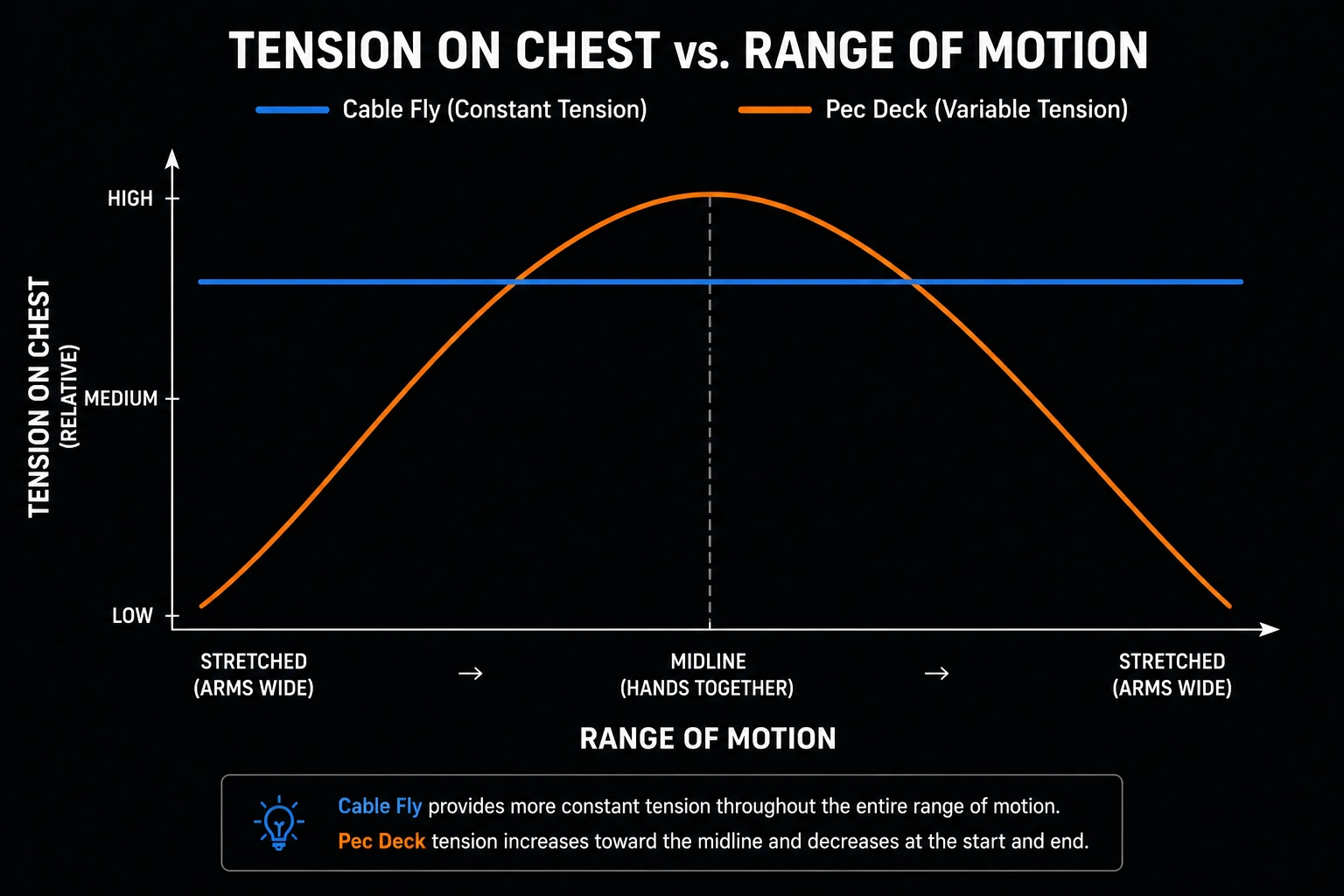
Cable fly maintains tension across the full arc; pec deck tension peaks near mid-contraction. Neither curve is objectively better for hypertrophy.
Beginner Friendliness
The pec deck is generally easier for beginners since the fixed machine arc removes the balance and cable-height judgment required for cable fly. Beginners can typically load the pec deck confidently within their first few sessions.
Cable fly requires a bit more coordination to set the right pulley height and control the arc of the movement, but is still very learnable with light weight and a few practice sessions.
Safety
Both are relatively low risk exercises when kept light to moderate, since neither is used for maximal loading. The main risk with cable fly is overstretching the shoulder at the bottom under too much load. Pec deck naturally limits this with a fixed path.
Programming
Use either as a finishing exercise after compound chest presses, typically for 2 to 4 sets of 10 to 20 reps. They work well as a superset partner or as the final movement on a chest day.
For a complete chest-day structure, use this comparison alongside the chest exercises guide and your preferred split from Push Pull Legs. To track your cable fly or pec deck sets and see your progression over time, Sleet logs every rep.
Cable Fly vs Pec Deck Reddit Claims, Coach Verdict
A common online argument is that one of these is objectively superior. In coaching practice, that is rarely true. If form quality drops on cable fly, pec deck usually wins that session. If you can control cable fly and use angle changes well, cable fly often gives more long term variety. The better move is the one you can progress with clean reps in your current training phase.
What Reddit Lifters Report (Anecdotal)
From the three Reddit threads you shared, a few patterns show up consistently. This is anecdotal user experience, not controlled evidence, but it is useful for practical programming decisions:
- In r/Fitness thread, many lifters preferred cable fly for freedom of movement and angle control, while others preferred pec deck for stability and easier chest isolation. A repeated theme was machine fit: if the pec deck setup does not match your body, it can feel awkward on shoulders.
- In r/Fitness_India thread, comments leaned toward “both are valid, pick what you can load hard with clean reps.” Some users favored pec deck for stability and easier progression, others favored cable fly for range and chest feel.
- In r/naturalbodybuilding thread, lifters emphasized that fly variations can help add chest-focused volume when pressing is limited by triceps or shoulder fatigue, but they are not mandatory if chest is already progressing well.
Common Mistakes
Cable fly mistakes: bending the elbows too much and turning the movement into a press (which shifts work to the shoulders and triceps), and overstretching at the bottom with too much weight. Keep a slight, fixed elbow bend and control the stretch.
Pec deck mistakes: using momentum to swing the weight instead of a controlled contraction, and setting the seat height incorrectly so the pads hit the shoulders instead of the forearms/upper arms. Adjust the seat so the pads align with your chest level before starting.
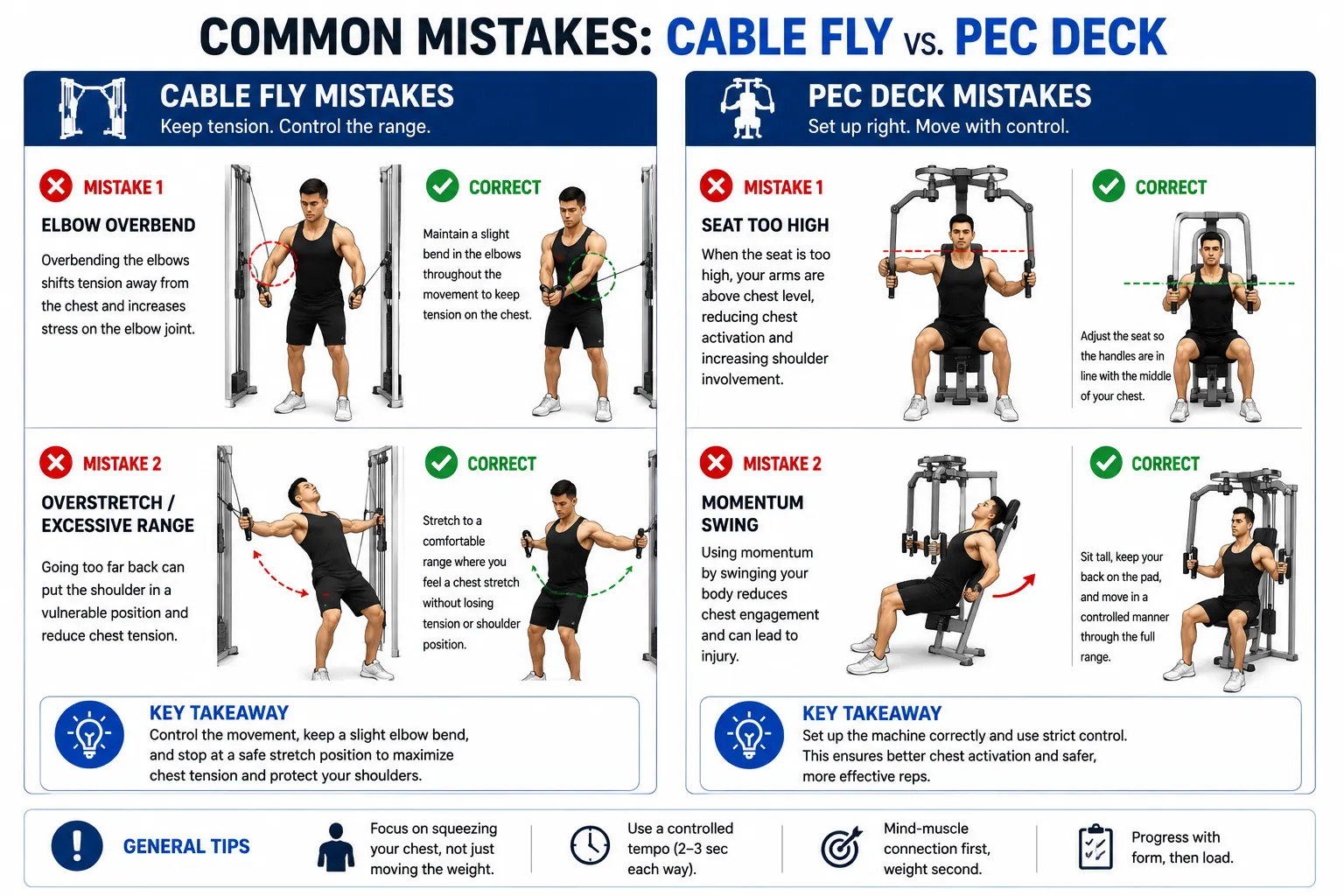
The most common errors on both exercises come from setup and load, not the exercises themselves.